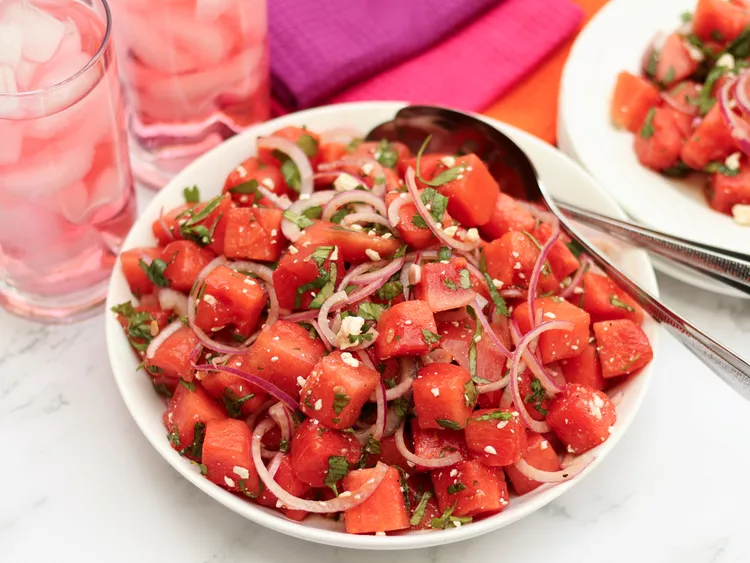
The Definitive Watermelon Feta Salad Recipe: A Masterclass in Sweet and Savory Balance
There is a precise moment in midsummer when the culinary world shifts its focus away from heavy, slow-simmered dishes toward food that requires minimal intervention and maximum freshness. Few dishes embody this seasonal philosophy more brilliantly than the classic Watermelon Feta Salad. At first glance, the combination might seem unusual to the uninitiated—combining a ultra-hydrating, sugary fruit with a sharp, brined sheep’s milk cheese. However, this pairing is a masterclass in flavor balancing, leaning heavily on the foundational culinary principle of contrasting elements to create harmony.
The success of this dish relies entirely on texture, temperature, and structural integrity. Watermelon is over 90% water, which means a poorly executed assembly can quickly transform a vibrant, crisp salad into a pooled, soggy mess. To elevate this simple combination into something worthy of a refined luncheon or an elegant backyard gathering, one must understand how to manage moisture, choose the correct structural accompaniments, and apply a dressing that enhances rather than drowns the star ingredients. This guide breaks down the professional techniques, ingredient mechanics, and chronological steps necessary to execute a flawless Watermelon Feta Salad every single time.
Why This Recipe Works: The Science of Contrast
In professional recipe development, dishes are engineered to stimulate multiple taste receptors simultaneously. This specific salad works because it triggers sweet, salty, sour, and umami receptors in a single bite.
-
The Flavor Profile: The natural sweetness of the ripe watermelon acts as a canvas. When contrasted with the aggressive, acidic saltiness of high-quality feta, the sugar in the melon tastes deeper and more nuanced.
-
The Aromatic Lift: Fresh mint leaves introduce a chemical compound called menthol, which triggers cold-sensitive receptors in the mouth, chemically amplifying the cooling, refreshing sensation of the chilled fruit.
-
Moisture Management: By introducing crisp English cucumbers and thinly sliced red onions, we add structural rigidity and a peppery bite. The cucumbers match the hydration of the melon while providing a distinct, clean crunch that prevents the salad from feeling texturally monotonous.
-
The Emulsion Bridge: A minimalist vinaigrette crafted from premium extra-virgin olive oil and fresh lime juice coats the fruit, creating a hydrophobic barrier. This temporary barrier helps retain the internal juices of the watermelon cubes while cutting through the rich, creamy density of the cheese.
Ingredients
For a recipe that requires zero cooking, the quality of your raw materials is paramount. There are no reductions, stocks, or high heats to mask inferior produce or low-grade dairy. Select each component with deliberate care.
For the Salad Base
-
6 cups seedless watermelon: Cut into uniform 1-inch cubes, thoroughly chilled.
-
1 large English cucumber: Halved lengthwise and sliced into 1/4-inch half-moons. (English or Persian cucumbers are preferred for their thin skins and small seed cavities, which minimize excess water runoff).
-
6 ounces high-quality block feta cheese: Crumbled into bite-sized chunks by hand (avoid pre-crumbled varieties).
-
1/2 cup red onion: Very thinly sliced into half-moons or “feathers.”
-
1/2 cup fresh mint leaves: Roughly torn or cut into a delicate chiffonade right before assembly.
For the Citrus-Herb Dressing
-
3 tablespoons extra-virgin olive oil: Opt for a robust, peppery, cold-pressed oil.
-
2 tablespoons fresh lime juice: Squeezed from approximately 1 to 2 vibrant, heavy-for-their-size limes.
-
1/4 teaspoon flaky sea salt: Used sparingly, as the cheese provides substantial salinity.
-
1/4 teaspoon freshly cracked black pepper: Coarsely ground for visual contrast and subtle, warming heat.
Step-by-Step Instructions
Follow these chronological steps precisely. The assembly layout is designed to minimize friction against the delicate cell walls of the fruit, ensuring your presentation remains pristine until it reaches the table.
Step 1: Subdue the Red Onion
Raw red onions provide an essential peppery counter-note, but their raw sulfur compounds can easily overwhelm the palate. To mellow their bite while preserving their crunch, submerge the thinly sliced red onions into a small bowl filled with ice water and a squeeze of fresh lime juice. Let them macerate for 10 minutes while you prepare the remaining components. Drain thoroughly and pat completely dry with a paper towel before using.
Step 2: Slice the Produce Uniformly
Using a sharp chef’s knife, remove the rind from a thoroughly chilled watermelon, ensuring all white pith is discarded. Slice the crimson flesh into uniform 1-inch cubes. Wash the English cucumber, split it down the center lengthwise, and slice it into clean half-moons. Uniform cutting ensures that every forkful delivers an even distribution of textures and flavors.
Step 3: Emulsify the Vinaigrette
In a small glass bowl or a glass measuring cup, combine the 3 tablespoons of premium extra-virgin olive oil with the 2 tablespoons of freshly squeezed lime juice. Add the small pinch of flaky sea salt and the coarsely cracked black pepper. Whisk vigorously with a small wire whisk until the liquid thickens slightly into a temporary emulsion.
Step 4: Combine the Base Elements
In a large, wide mixing bowl, gently combine the chilled watermelon cubes, the sliced English cucumbers, and the drained, softened red onions.
Step 5: Dress with Moderation
Pour the citrus vinaigrette over the melon mixture. Using a flexible rubber spatula or clean hands, gently fold the ingredients from the bottom of the bowl upward. Do not overwork the mixture; aggressive stirring will bruise the watermelon cells, causing them to leak water prematurely and dilute the dressing.
Step 6: Layer the Cheese and Herbs
Add the hand-crumbled block feta and the freshly torn mint leaves to the bowl. Give the salad one single, exceptionally gentle turn to scatter the cheese and herbs throughout the fruit.
Step 7: Plate and Serve Immediately
Transfer the salad out of the mixing bowl and spread it across a wide, shallow, pre-chilled serving platter rather than piling it into a deep bowl. Plating broadly ensures that the weight of the ingredients does not crush the watermelon at the bottom. Garnish with a few un-torn mint sprigs and an extra whisper of cracked black pepper. Serve immediately.
Expert Tips & Variations
-
The Feta Fallacy: Never purchase pre-crumbled feta cheese for this dish. Pre-crumbled varieties are coated in anti-caking agents (such as powdered cellulose or potato starch) to keep the pieces separate. This robs the cheese of its natural creaminess and introduces a chalky texture. Purchase a solid block of Greek or French feta packed in brine, drain it, and crumble it gently between your fingers immediately before serving.
-
The Temperature Axiom: A lukewarm watermelon salad is a culinary failure. The contrast between the cold fruit and the rich cheese is structural to the dish’s identity. Ensure your watermelon and cucumber spend at least 4 hours in the refrigerator prior to slicing.
-
The Osmosis Factor: Salt is hygroscopic, meaning it draws moisture out of its surroundings. If you dress this salad an hour before dinner, you will return to find a bowl of liquid and deflated fruit. Always dress, toss, and cheese the salad within 15 minutes of serving.
Ingredient Substitution Matrix
The structural blueprint of this salad can be subtly adjusted to accommodate different flavor profiles or dietary restrictions without sacrificing the integrity of the dish.
| Original Ingredient | Culinary Alternative | Flavor Profile & Structural Impact |
| Lime Juice | Aged White Balsamic Vinegar | Shifts the acid profile from bright and tropical to a mellow, syrupy, orchard-sweet finish. |
| Fresh Mint | Fresh Sweet Basil Leaves | Introduces an aromatic, anise-like herbal note that pairs beautifully with the cucumber. |
| Feta Cheese | Aged Cotija Cheese | Maintains the dry, crumbly texture and salty punch, but offers a slightly milkier, Latin-American finish. |
| Feta Cheese | Firm Almond-Based Vegan Feta | Replicates the brined, crumbly texture perfectly for a completely plant-based, dairy-free adaptation. |
| Red Onion | Fresh French Shallots | Softens the allium presence significantly, offering a delicate garlic-and-onion sweetness. |
Serving Suggestions
This dish behaves beautifully as a bright, clearing component in a multi-course menu or as a standout side dish at outdoor events.
-
Protein Pairings: The high acidity and cleansing nature of the lime and mint make this salad an impeccable counterpoint to rich, smoky, or fatty grilled proteins. Serve it alongside marinated skirt steak, charred lemon-herb chicken skewers, or grilled cedar-plank salmon.
-
The Mediterranean Spread: Incorporate this salad into a broader summer mezze platter. Position it alongside charred pita bread, smoky baba ganoush, garlic-rubbed lamb chops, and marinated kalamata olives.
-
Beverage Harmonization: To complement the crispness of the salad, pair it with highly acidic, thoroughly chilled beverages. A dry, pale Provençal rosé, a mineral-forward Sauvignon Blanc, or a non-alcoholic sparkling water infused with fresh lime rind and cucumber ribbons will elevate the dining experience.
Storage & Make-Ahead Notes
Because of the delicate cellular structure of raw watermelon, this salad is indisputably at its peak within an hour of assembly. However, you can easily streamline your preparation process for seamless entertaining.
-
The Advanced Prep Strategy: Up to 24 hours in advance, you may cube the watermelon and slice the cucumbers. Store them in separate airtight containers lined with clean paper towels; the paper towels will wick away any weeping moisture, keeping the fruit surfaces dry and crisp. You can also slice the onions and crumble the feta, keeping them isolated in their own containers. Whisk the dressing together in a small jar and leave it at room temperature.
-
The Final Assembly: When your guests sit down, simply dump your dry prepped ingredients into a bowl, shake the dressing jar, pour, fold, and platter. This takes less than two minutes.
-
Handling Leftovers: If you have leftovers, store them in an airtight container in the refrigerator for up to 24 hours. Be aware that the watermelon will inevitably soften slightly and release its juices, turning the dressing pink and softening the feta. Before eating leftovers, tilt the container to drain off the excess pooled liquid, and revitalize the flavors with a fresh squeeze of lime juice and a handful of freshly chopped mint. Do not freeze this salad, as freezing breaks down the cellular walls of both the fruit and the cheese, resulting in a completely mushy texture upon thawing.
Nutrition Information
The following estimates are calculated based on a standard single serving size of approximately 1.5 cups.
-
Calories: 168 kcal
-
Protein: 4.5 g
-
Fat: 11.5 g
-
Saturated Fat: 4.5 g
-
Carbohydrates: 15 g
-
Fiber: 1.5 g
-
Sugar: 10.5 g
-
Sodium: 330 mg