


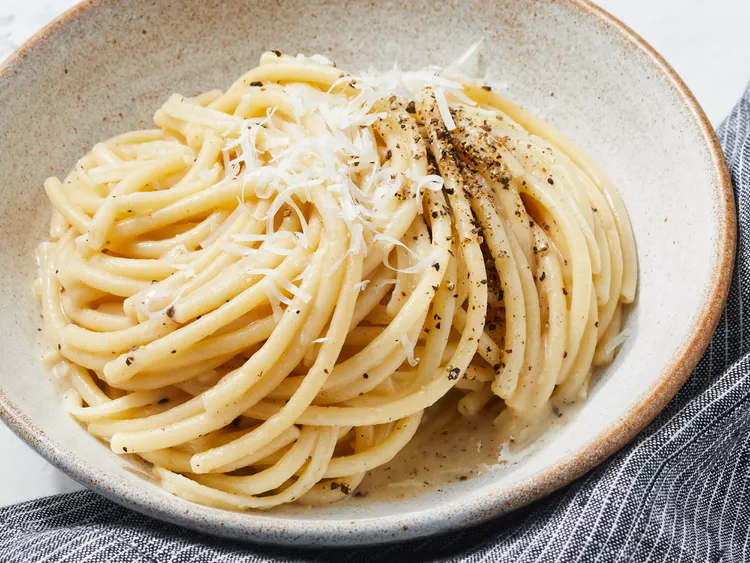
The Ultimate Bucatini Cacio e Pepe: A Masterclass in Roman Minimalism
In the pantheon of Italian pasta, Cacio e Pepe stands as the ultimate litmus test for a chef. Translating simply to “cheese and pepper,” this ancient Roman dish is a marvel of culinary engineering. It requires no butter, no oil, and certainly no cream—only the strategic manipulation of starch and protein.
While traditionalists often reach for spaghetti, the use of Bucatini—a thick, straw-like pasta with a hollow center—elevates the dish. The hole (the buco) acts as a vessel, pulling the sharp, peppery emulsion inside every strand. This guide breaks down the science of the cremina (the cream) to ensure your sauce never clumps and your flavors are authentically Roman.
Why This Bucatini Cacio e Pepe Works
-
Starch Concentration: By cooking the pasta in a minimal amount of water, we create a “liquid gold” starch base that prevents the cheese from breaking.
-
The Toasted Pepper Method: Toasting whole peppercorns blooming in the pan awakens essential oils that pre-ground pepper simply lacks.
-
Temperature Control: We utilize a “tempering” technique for the Pecorino, ensuring a velvet-smooth finish every time.
Ingredients
To achieve a restaurant-quality finish, the quality of your ingredients is the only thing to hide behind. Use the best you can find.
-
1 lb Bucatini: Preferably bronze-die extruded (this creates a rough surface for the sauce to grip).
-
2 cups (approx. 6 oz) Pecorino Romano: Finely grated. It must be sheep’s milk cheese for that signature salty tang.
-
2 tbsp Whole Black Peppercorns: Coarsely crushed (use a mortar and pestle or the bottom of a heavy skillet).
-
Kosher Salt: For the pasta water (use about half of your usual amount).
Step-by-Step Instructions
1. The Low-Water Boil
Fill a wide pot or deep sauté pan with just enough water to cover the pasta (about 3 quarts). Add a small pinch of salt. Because there is less water, the starch concentration will be much higher, which is vital for a stable emulsion. Drop the Bucatini and cook for 2 minutes less than the package’s al dente instructions.
2. Toast the Peppercorns
While the pasta boils, place the crushed peppercorns in a large, dry skillet over medium heat. Toast for 90 seconds until fragrant. Ladle in about ½ cup of the starchy pasta water. The water will bubble and turn a light tan color as it deglazes the pepper oils. Turn the heat to low.
3. Create the “Cheese Paste”
In a medium mixing bowl, combine the grated Pecorino Romano with a small splash of warm pasta water. Whisk with a fork until it forms a thick, damp paste (resembling wet sand). This “buffers” the cheese, preventing it from hitting the hot pan and instantly turning into a rubbery clump.
4. Finishing the Pasta
Using tongs, move the Bucatini directly into the skillet with the pepper water. Do not drain the pot! Increase the heat to medium and toss the noodles constantly. Add another ½ cup of pasta water. The friction of tossing finishes the cooking process and creates a glossy, starchy glaze on the noodles.
5. The Emulsification (The Most Critical Step)
Remove the skillet from the heat entirely. Wait 30 seconds for the temperature to drop slightly. Add the cheese paste to the pasta. Stir and toss vigorously. If the sauce looks too thick, add a tablespoon of pasta water at a time. The result should be a shimmering, creamy coating that clings to every strand.
Expert Tips for Success
The “Anti-Clump” Secret
The most common mistake is adding cheese to a boiling pan. Pecorino Romano proteins tighten and seize at high temperatures. By removing the pan from the heat and using a cheese “paste” rather than dry shavings, you guarantee a smooth sauce.
Pepper Selection
If possible, use a blend of Tellicherry and Sarawak peppercorns. Tellicherry provides a floral brightness, while Sarawak offers a deep, earthy heat that cuts through the richness of the sheep’s milk cheese.
Ingredient Substitutions
| Original Ingredient | Best Substitute | Note |
| Bucatini | Spaghetti or Tonnarelli | Avoid thin pasta like Angel Hair. |
| Pecorino Romano | 50/50 Pecorino & Parmigiano | Milder and less salty. |
| Black Peppercorns | Green Peppercorns | For a milder, more herbal heat. |
Serving & Pairing Suggestions
Cacio e Pepe waits for no one. It must be served in warmed bowls to prevent the sauce from thickening too quickly.
-
The Garnish: A final, light dusting of Pecorino and a singular crack of fresh pepper.
-
Side Dish: A simple arugula salad with lemon vinaigrette provides the necessary acidity to balance the heavy fats of the cheese.
-
Wine Pairing: Look for a high-acid Italian white, such as a Greco di Tufo or a Vermentino.
Storage & Reheating
-
Storage: Store in an airtight container for up to 2 days.
-
Reheating: This is a “one-and-done” dish. However, if you must reheat, do so in a pan over low heat with a splash of water and a knob of butter to help re-emulsify the sauce. Avoid the microwave, which will cause the cheese to separate.
Nutrition Information
Serving Size: 1 plate (approx. 1/4 of recipe)
-
Calories: 540
-
Protein: 22g
-
Fat: 19g
-
Saturated Fat: 11g
-
Carbohydrates: 70g
-
Fiber: 3g
-
Sugar: 2g
-
Sodium: 940mg