


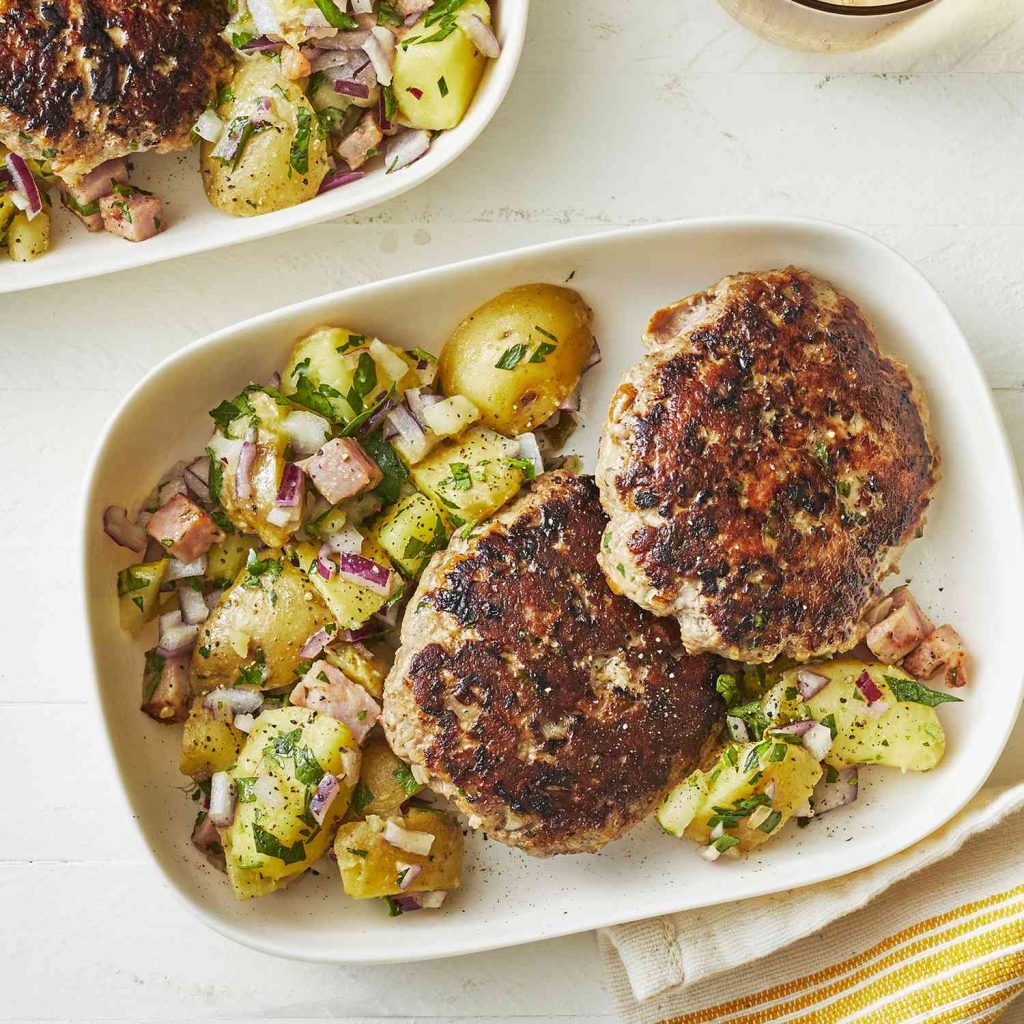
Authentic German Frikadellen: The Real “German Hamburger” Recipe
Before the American hamburger conquered the globe, there was the Frikadelle. Known variously as Bulette in Berlin, Fleischpflanzerl in Bavaria, or simply Frikadelle in the Rhineland, this pan-fried meat patty is the spiritual ancestor of the modern burger.1 But to call it just a “burger” would be a disservice to its unique texture and depth of flavor.
Unlike a typical American beef patty—which is often just ground meat and salt—the German Frikadelle is a culinary masterclass in seasoning and binding. It is a savory blend of beef and pork, lightened with milk-soaked bread, bound with egg, and spiked with a distinct bouquet of marjoram, mustard, and onions. The result? A patty that is impossibly fluffy on the inside, crispy and dark on the outside, and savory enough to be eaten on its own without a bun.
Whether you are looking to recreate a meal from a German Imbiss (snack stand), searching for the perfect Oktoberfest main course, or simply want to elevate your weeknight dinner rotation, this guide will teach you how to make authentic German Frikadellen from scratch.
Why This Recipe Works
-
The “Panade” Secret: The hallmark of a good Frikadelle is its texture. It is never dense or rubbery. We use a panade—stale bread soaked in milk—to break up the protein structure of the meat. This keeps the patty tender and juicy even after frying.
-
Flavor Depth: We don’t rely on toppings for flavor. The seasoning is mixed into the meat. Sharp German mustard, sweet paprika, and aromatic marjoram ensure every bite is packed with savory notes.
-
The Maillard Reaction: Unlike grilled burgers, Frikadellen are pan-fried in clarified butter or oil.2 This creates a uniform, dark-brown crust across the entire surface, locking in juices and providing a satisfying crunch.
Ingredients: The Anatomy of a German Hamburger
To achieve the authentic taste of a German grandmother’s kitchen, precision with ingredients is key. Here is what you will need.
The Meat Blend
-
500g (approx. 1.1 lbs) Mixed Ground Meat: The traditional German mix is called Halb und Halb (half and half)—consisting of 50, percent beef and 50 percent pork. The beef provides the deep, meaty flavor, while the pork provides the necessary fat content to keep the patty moist.
-
Chef’s Note: If you cannot eat pork, you can use 100% beef, but look for a blend with at least 20% fat content (80/20 chuck) to avoid dryness.
-
The Binder
-
1 Stale Bread Roll (Brötchen): In Germany, yesterday’s breakfast roll is today’s dinner ingredient. If you don’t have a crusty white roll, 2 thick slices of stale white bread or 1/2 cup of plain dry breadcrumbs will work.
-
120ml (1/2 cup) Whole Milk: Used to soak the bread. Warm milk absorbs faster.
-
1 Large Egg: Essential for binding the mixture so it doesn’t fall apart in the pan.
The Aromatics
-
1 Medium Onion: Finely diced.
-
1 Clove Garlic: Minced (optional, but highly recommended for depth).
-
1 tbsp Fresh Parsley: Finely chopped.
The Spices (The “Frikadelle Flavor Profile”)
-
1 tsp Medium-Hot Mustard: Use a German brand like Thomy or Löwensenf if possible. Dijon is a passable substitute.
-
1 tsp Dried Marjoram: This is non-negotiable for authentic flavor. Marjoram is the signature herb of German meat cookery.
-
1 tsp Salt: (Adjust to taste).
-
1/2 tsp Black Pepper: Freshly ground.
-
1/2 tsp Paprika: Sweet (noble sweet) paprika is traditional.
-
Pinch of Nutmeg: Freshly grated nutmeg adds a subtle warmth that you can’t quite identify but would miss if it weren’t there.
For Frying
-
2 tbsp Clarified Butter (Butterschmalz) or Neutral Oil: Clarified butter adds a nutty flavor and has a high smoke point. Canola or vegetable oil are good alternatives.
Step-by-Step Instructions
Step 1: Prepare the Bread Binder
The secret to the fluffiness of a Frikadelle is the soaked bread. Break your stale roll or bread slices into small chunks and place them in a small bowl. Pour the warm milk over the bread.
-
Technique: Place a small plate or weight on top to keep the bread submerged. Let it soak for 10–15 minutes until it is completely soggy and soft.
Step 2: Sauté the Onions
This is a step many home cooks skip, but professionals do not.
Heat a teaspoon of oil in your skillet over medium heat. Add the finely diced onions and sauté them until they are translucent and soft (about 5–6 minutes). Add the minced garlic in the last minute of cooking to prevent burning.
-
Why do this? Adding raw onions to the meat mixture can cause the patties to steam from the inside, releasing water and preventing the meat from binding properly. Sautéing concentrates their sweetness and ensures a better texture. Allow the onion mixture to cool slightly.
Step 3: Squeeze the Bread
Once the bread is soft, take it out of the milk and squeeze it firmly with your hands to remove excess liquid. It should feel like a damp sponge, not a dripping mess. Discard the leftover milk. If the bread is too wet, your meat mixture will be sloppy.
Step 4: The Mix
In a large mixing bowl, combine:
-
The ground meat
-
The squeezed bread
-
The cooled onion/garlic mixture
-
Egg
-
Mustard, parsley, marjoram, salt, pepper, paprika, and nutmeg.
Using your hands (clean or gloved), knead the mixture until it is well combined.
-
Texture Check: The mixture should be sticky but hold its shape. If it feels too wet, sprinkle in a tablespoon of dry breadcrumbs. If it feels too dry, add a splash of milk.
Step 5: The Fry Test (Crucial Step)
Before shaping all your patties, heat a tiny bit of oil in your pan. Pinch off a grape-sized piece of the meat mixture and fry it until cooked through. Taste it.
-
Does it need more salt?
- Is the marjoram coming through?
Adjust the seasoning of the raw batch now. Once the patties are formed, there is no turning back.
Step 6: Shape the Patties
Wet your hands slightly with cold water to prevent sticking. Divide the meat mixture into 4 to 6 equal portions. Roll them into balls and then flatten them into thick patties (about 3/4 to 1 inch thick).
-
Pro Tip: Press a small indentation into the center of each patty with your thumb. As meat cooks, proteins contract, which usually forces the center of a burger to puff up into a ball. The indentation ensures your Frikadelle stays flat and cooks evenly.
Step 7: Pan-Fry to Perfection
Heat the clarified butter or oil in a large, heavy-bottomed skillet (cast iron or stainless steel is excellent here) over medium-high heat. Place the patties in the pan, ensuring you don’t overcrowd them. Work in batches if necessary.
Fry for about 4–5 minutes on the first side. You are looking for a dark, crusty brown sear—darker than you might cook an American burger. Flip and fry for another 4–5 minutes on the other side.
-
Temperature Control: If they are browning too fast but the center is still raw, lower the heat to medium-low. The pork must be cooked through (aim for an internal temperature of 160°F / 71°C).
Step 8: Rest and Serve
Remove the Frikadellen from the pan and let them rest on a plate for 3–5 minutes. This allows the juices to redistribute throughout the meat, ensuring a moist bite.
Expert Tips for Perfect Frikadellen
1. Don’t Overwork the Meat
While you need to mix the ingredients thoroughly to distribute the bread binder, stop once it is homogeneous. Over-kneading ground meat breaks down the protein structure too much, resulting in a rubbery, sausage-like texture rather than a fluffy patty.
2. The Freshness Factor
While you can use pre-ground meat from the supermarket, the best Frikadellen come from freshly ground meat. If you have a meat grinder, buy a piece of beef chuck and a piece of pork shoulder and grind them yourself on a coarse setting. The difference in texture is astonishing.
3. Oil Management
Don’t be shy with the oil or butter in the pan. Frikadellen are essentially shallow-fried. The fat conducts heat into the crevices of the patty, creating that signature crust.
Variations: Regional German Twists
Germany is a federal republic of flavors, and the Frikadelle changes as you move across the map.
-
The Berlin Bulette: In Berlin, these are often larger and served with a dab of extra spicy mustard. They are a staple of the city’s nightlife and Kneipen (pubs).
-
Bavarian Fleischpflanzerl: Bavarians often incorporate ground veal into the mix for a lighter color and flavor.3 They also tend to use more parsley and sometimes lemon zest.
-
Fischfrikadellen: Travel north to Hamburg or the coast, and you will find “Fish Frikadellen” made with minced cod or pollock, dill, and onions—served in a roll with remoulade sauce (this is the famous Fischbrötchen).
-
Jäger Style (Hunter Style): Serve the patties smothered in a rich, creamy mushroom gravy (Jägersauce).
Serving Ideas: How to Eat Them Like a Local
In Germany, you will rarely see a Frikadelle served inside a soft brioche bun with lettuce, tomato, and cheese. The focus is on the meat itself. Here are three traditional ways to serve them:
1. The Classic Lunch (Mittagessen)
Serve hot Frikadellen alongside Kartoffelsalat (German Potato Salad). The vinegar and oil base of a traditional German potato salad cuts through the richness of the fried meat perfectly. Add a side of braised red cabbage (Rotkohl) or a simple cucumber salad with dill.
2. The Snack (Imbiss Style)
Slice a crusty German roll (Brötchen) in half. Place the hot (or cold!) Frikadelle inside and slather it with sharp, medium-hot mustard (Mittelscharfer Senf). No lettuce, no cheese—just the crunch of the bread, the spice of the mustard, and the savory meat.
3. The Low-Carb Plate
For a lighter meal, serve the patties with steamed green beans topped with butter and bacon bits, or a mixed green salad with a yogurt dressing.
Storage and Reheating
One of the best things about Frikadellen is that they are arguably just as delicious cold as they are hot. They are the ultimate picnic food.
| Storage Method | Guidelines |
| Refrigerator | Store cooked patties in an airtight container for up to 3–4 days. Eat cold or reheat. |
| Freezer (Raw) | Flash freeze shaped, raw patties on a baking sheet, then transfer to a freezer bag. Freeze for up to 3 months. Thaw in the fridge before frying. |
| Freezer (Cooked) | Cool completely, then freeze in a single layer. Good for 2 months. |
| Reheating |
Pan: Low heat with a splash of water and a lid (steams them moist). Microwave: 60-90 seconds (can make them rubbery). Air Fryer: 350°F (175°C) for 3–4 minutes. |