


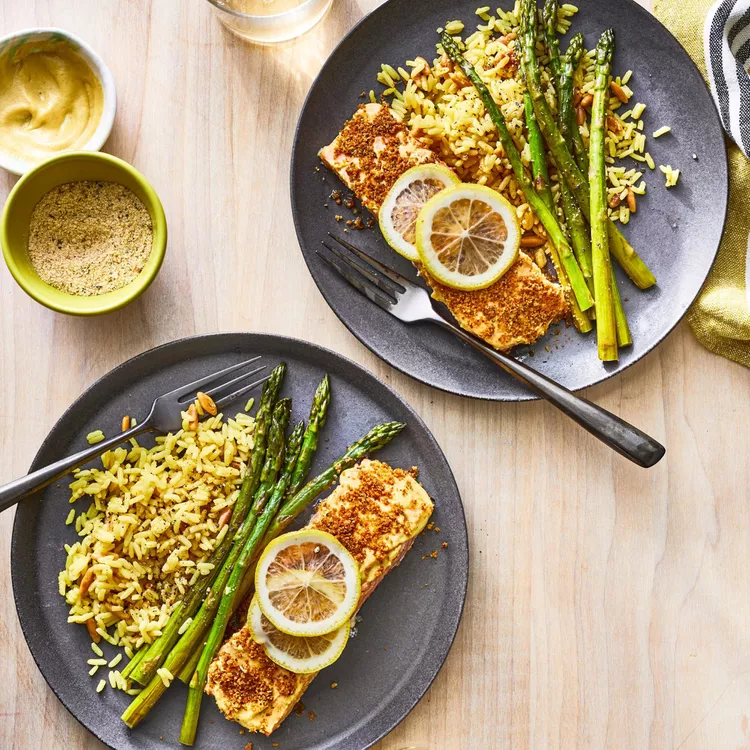
The Elegance of Simplicity: Perfect Baked Salmon Fillets With a Crisp Dijon Crust
There is a distinct brilliance in a recipe that demands minimal effort yet yields an undeniably sophisticated result. In the fast-paced realm of weeknight cooking, salmon is frequently relied upon, yet it remains notoriously easy to misjudge. A few minutes too long in the oven, and a beautiful piece of fish turns dry and chalky. The solution to this culinary challenge does not require advanced technique; rather, it relies on a classic flavor combination that French home cooks have used for generations: the strategic application of Dijon mustard.
This recipe for Baked Salmon Fillets Dijon transforms a standard piece of seafood into a restaurant-quality centerpiece in under twenty minutes. By coating thick, center-cut fillets in a vibrant blend of smooth Dijon, whole-grain mustard, fresh garlic, and a touch of honey, you create an emulsified barrier that protects the delicate flesh from drying out. Top that with an herbaceous, golden panko breadcrumb crust, and you achieve the ultimate textural contrast—silky, buttery fish underneath a deeply savory, shattering crunch.
Why This Recipe Works: The Science of the Dijon Emulsion
To understand why this method is so successful, it helps to understand how fish reacts to dry oven heat. Salmon is rich in healthy omega-3 fatty acids, but its muscle fibers are short and delicate. When exposed to a hot oven, these fibers contract quickly, often squeezing out moisture along with a white protein called albumin.
Dijon mustard acts as an exceptional protective shield. Because it is a stable emulsion of mustard seeds, vinegar, and water, it coats the exterior of the fish, slowing down surface evaporation and trapping natural juices inside. Furthermore, its natural acidity cuts through the inherent oiliness of the salmon, brightening the entire flavor profile. Finally, the sticky texture of the glaze serves as the perfect culinary binder, ensuring every single crumb of the seasoned panko coating adheres to the fish rather than scattering across the baking sheet.
Ingredients You Will Need
For a dish this streamlined, ingredient quality is paramount. Seek out fresh, sustainably sourced salmon with a vibrant pink-orange hue and firm flesh that springs back to the touch.
For the Salmon Base
-
4 center-cut salmon fillets (6 ounces each, preferably skin-on, uniform thickness)
-
1 tablespoon extra-virgin olive oil (for prepping the pan)
-
½ teaspoon fine sea salt
-
¼ teaspoon freshly cracked black pepper
For the Dijon-Garlic Glaze
-
3 tablespoons traditional smooth Dijon mustard
-
1 tablespoon whole-grain mustard (for visual texture and pops of rustic flavor)
-
2 cloves garlic, finely minced or grated on a microplane
-
1 tablespoon freshly squeezed lemon juice
-
1 teaspoon pure clover honey or maple syrup
For the Herbaceous Panko Crust
-
½ cup unseasoned Japanese panko breadcrumbs
-
2 tablespoons unsalted butter, melted
-
2 tablespoons fresh flat-leaf Italian parsley, finely chopped
-
1 teaspoon freshly grated lemon zest
-
¼ teaspoon garlic powder
Step-by-Step Instructions
An absolute adherence to timing and temperature ensures the salmon remains incredibly moist. Follow these steps carefully for a flawless presentation.
Step 1: Temper and Prep the Fish
Preheat your oven to 400°F (204°C) with a rack positioned firmly in the center. Line a heavy, rimmed baking sheet with aluminum foil or culinary parchment paper. Drizzle one tablespoon of olive oil across the surface to prevent the skin from sticking.
Remove the salmon fillets from the refrigerator 10 to 15 minutes before you intend to bake them. Bringing the fish closer to room temperature—a process known as tempering—prevents the outside from overcooking while the center remains cold. Use a paper towel to pat each fillet thoroughly dry on all sides. Season the tops evenly with the sea salt and cracked black pepper.
Step 2: Whisk the Glaze
In a small mixing bowl, combine the smooth Dijon mustard, rustic whole-grain mustard, minced garlic, fresh lemon juice, and honey. Whisk with a small fork or spoon until the ingredients are completely integrated into a thick, glossy glaze.
Step 3: Combine the Panko Coating
In a separate medium bowl, toss together the panko breadcrumbs, finely chopped fresh parsley, lemon zest, and garlic powder. Pour the melted unsalted butter over the mixture and toss thoroughly with a fork. The texture should resemble damp sand, with every breadcrumb lightly coated in butter to ensure even browning.
Step 4: Assemble the Fillets
Arrange the seasoned salmon fillets on the prepared baking sheet, leaving at least two inches of space between each piece to allow the dry heat to circulate effectively.
Using a pastry brush or the back of a spoon, spread a generous, even layer of the Dijon glaze over the top and slightly down the sides of each fillet. Immediately afterward, divide the panko mixture equally among the four fillets, gently pressing the crumbs into the mustard glaze so they lock into place.
Step 5: Bake to Perfect Doneness
Transfer the baking sheet to the center rack of the oven. Bake at 400°F (204°C) for 12 to 14 minutes, depending on the exact thickness of your fillets. The panko should be a beautiful light golden hue, and the sides of the fish should look opaque.
For an extra-crispy, deep golden top, turn the oven to Broil for the final 60 seconds of cooking. Watch the oven like a hawk during this stage, as breadcrumbs can turn from golden to scorched in a matter of seconds. Remove from the oven and let the salmon rest on the pan for 2 minutes before transferring to plates. Serve with fresh lemon wedges.
Culinary Doneness & Temperature Guide
Oven strengths vary wildly, making a digital instant-read thermometer the most reliable tool in a kitchen. Insert the probe into the thickest part of the salmon to check its internal temperature.
| Internal Temperature | Visual & Textural Indicators | Culinary Doneness Level |
| 120°F to 125°F | Translucent, dark pink center; incredibly delicate and soft texture. | Rare to Medium-Rare |
| 130°F to 135°F | Slightly translucent at the very core; flakes gently under a fork. | Medium (Chef Recommended) |
| 140°F to 145°F | Completely opaque throughout; firm to the touch. | Medium-Well to Well-Done |
Expert Tips and Ingredient Variations
Chef’s Insights for Success
-
Leave the Skin On: Even if you do not care to consume the salmon skin, cook the fish with the skin intact. It acts as a natural insulative barrier against the direct heat of the baking sheet, keeping the bottom layer of the fish beautifully tender.
-
The Dryness Test: If you do not own a meat thermometer, gently press the top of the fillet with a fork. If the flakes begin to separate easily along the natural white fat lines, the fish is done.
Strategic Substitutions
-
The Gluten-Free Modification: To make this dish entirely gluten-free, replace the traditional panko breadcrumbs with an equal amount of certified gluten-free panko, crushed rice crackers, or finely chopped raw pecans. The pecans add a gorgeous, buttery crunch that complements the mustard beautifully.
-
The Dairy-Free Option: Simply swap the two tablespoons of melted unsalted butter in the crust for a high-quality, cold-pressed avocado oil or extra-virgin olive oil.
-
Adjusting the Sweetness: If you prefer a more pronounced contrast between sweet and sharp, increase the honey in the glaze to two teaspoons, or swap it for pure dark maple syrup for a warm, autumnal undertone.
Serving Suggestions
Baked Salmon Fillets Dijon carries a robust, distinct personality that anchors a plate beautifully. Pair it with clean, bright sides that don’t compete with the mustard crust.
-
Vegetable Accompaniments: A bed of crisp, pan-seared asparagus spears or quick-roasted broccolini tossed with lemon juice provides an excellent, vibrant contrast. Alternatively, a simple arugula salad dressed with premium olive oil and shaved Parmesan cuts through the richness of the fish nicely.
-
Grains and Starches: Serve the fillets over a bed of fluffy, herb-flecked quinoa, wild rice pilaf, or alongside crispy roasted fingerling potatoes. The starches excel at catching any bits of crunchy panko and glaze that fall during serving.
-
Wine Pairings: Look for high-acid white wines to cleanse the palate. A dry, cold Sauvignon Blanc, a crisp French Chablis, or even a light, elegant Pinot Noir will match the structural weight of the salmon effortlessly.
Storage and Reheating Protocol
Refrigeration
Place completely cooled leftovers into a shallow, airtight glass container. Keep refrigerated and consume within 3 days.
Reheating Safely
Reheating seafood requires a delicate hand to avoid turning the fish rubbery. Avoid the microwave if possible. Instead, place the salmon on a rimmed baking sheet, add a single tablespoon of water to the pan, and tent the entire sheet loosely with aluminum foil. Warm in a preheated oven at 300°F (149°C) for roughly 8 to 10 minutes, removing the foil during the final 2 minutes to let the panko top crisp back up.
Nutrition Information
The following values represent a realistic, calculated estimate for one complete serving (one 6-ounce prepared fillet).
-
Calories: 395 kcal
-
Protein: 37g
-
Fat: 22g
-
Saturated Fat: 6.5g
-
Carbohydrates: 9g
-
Fiber: 1g
-
Sugar: 2g
-
Sodium: 510mg