


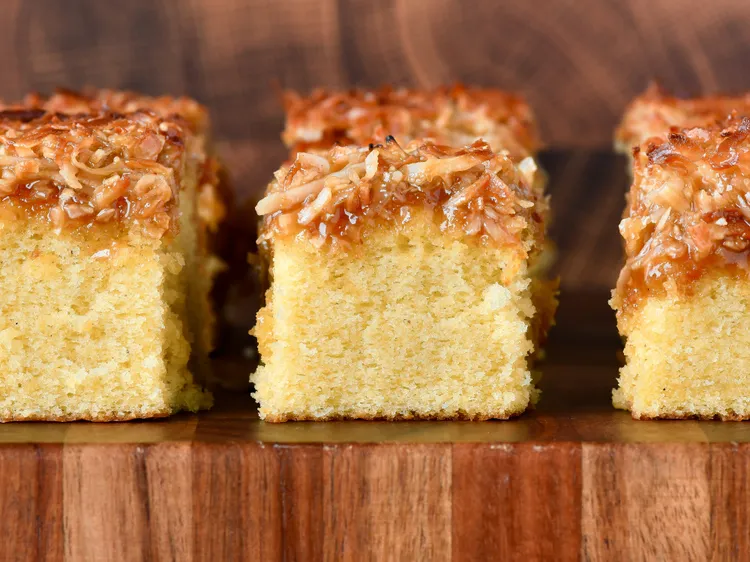
The Ultimate Danish Dream Cake (Drømmekage): A Caramelized Coconut Masterpiece
There are few cakes in the global repertoire that manage to be simultaneously humble and deeply decadent. The Danish Dream Cake, or Drømmekage fra Brovst, is the crown jewel of Denmark’s “hygge” culture. It is a soul-warming combination of a velvety, airy sponge base topped with a thick, bubbling layer of caramelized coconut and butter.
The magic of this recipe lies in the contrast: the cake is light and understated, while the topping—dark, chewy, and intensely flavorful—melts into the sponge as it finishes in the oven. Whether you are a seasoned baker or a curious novice, this guide provides the professional techniques needed to achieve the perfect golden crust and the moistest crumb possible.
The Origins of a Scandi Classic
While the recipe became a national sensation in Denmark during the 1960s after winning a baking competition, its roots are firmly planted in the small town of Brovst. Unlike a standard coffee cake, the Dream Cake relies on a “hot milk” sponge method. This technique ensures the cake remains soft for days, providing a sturdy foundation for the heavy, rich coconut topping. It is the quintessential afternoon treat, best enjoyed with a strong cup of coffee and good company.
Ingredients
For the Vanilla Sponge Base
-
4 large eggs, at room temperature
-
1 ¼ cups granulated sugar
-
2 cups all-purpose flour, sifted
-
3 tsp baking powder
-
1 tsp vanilla extract (or the seeds of one vanilla bean)
-
1 cup whole milk
-
4 tbsp unsalted butter
-
¼ tsp fine sea salt
For the Caramelized Coconut Topping
-
1 cup unsalted butter (2 sticks)
-
½ cup whole milk
-
1 ¾ cups dark brown sugar, packed (light brown sugar works, but dark adds more depth)
-
2 ½ cups shredded unsweetened coconut
-
¼ tsp salt
Step-by-Step Instructions
1. Prep and Preheat
Preheat your oven to 350°F (175°C). Grease a 9×13-inch baking pan with butter and line the bottom with parchment paper, leaving an overhang on the sides for easy removal.
2. Beat the Eggs and Sugar
In a large bowl or the bowl of a stand mixer fitted with the whisk attachment, combine the eggs and granulated sugar. Beat on medium-high speed for 5–7 minutes.
Chef’s Note: Do not rush this step. You are looking for the “ribbon stage,” where the mixture is pale, thick, and tripled in volume. This aeration is what gives the cake its “dreamy” lightness.
3. The Hot Milk Method
In a small saucepan over medium heat, combine the milk and 4 tablespoons of butter. Heat just until the butter is melted and the milk is steaming (do not let it reach a rolling boil). Remove from heat and stir in the vanilla extract.
4. Fold and Incorporate
Sift the flour, baking powder, and salt together. Gently fold the dry ingredients into the egg mixture using a spatula, being careful not to deflate the air bubbles. Gradually pour in the warm milk-butter mixture, stirring gently until the batter is smooth and uniform.
5. The First Bake
Pour the batter into the prepared pan. Bake for 25–30 minutes. The cake should be golden and a toothpick inserted into the center should come out clean. While the cake is in its final minutes of baking, prepare the topping.
6. Prepare the Coconut Topping
In a medium saucepan, combine the butter, dark brown sugar, and milk. Bring to a boil over medium heat, stirring constantly. Once boiling, stir in the shredded coconut and salt. Let it simmer for 1–2 minutes until the mixture thickens slightly and the sugar is fully dissolved.
7. The Final Caramelization
Remove the cake from the oven and increase the oven temperature to 425°F (220°C). Spread the warm coconut mixture evenly over the hot cake. Return the pan to the oven and bake for an additional 5–8 minutes.
Visual Cue: Watch closely! The topping should be bubbling vigorously and turning a deep, rich amber brown. It can burn quickly due to the high sugar content.
8. Cooling
Allow the cake to cool completely in the pan. As it cools, the caramel topping will set into a fudgy, slightly crunchy crust.
Expert Tips & Variations
Professional Baking Tips
-
Sift Your Flour: Because the sponge is so delicate, any lumps of flour will weigh it down. Sifting ensures an even crumb.
-
Temperature Matters: Ensure your eggs are at room temperature. Cold eggs will not whip to the necessary volume.
-
Don’t Over-mix: When adding the milk and flour, use a gentle folding motion. Over-mixing develops gluten, which leads to a tough, bread-like texture rather than a tender cake.
Ingredient Substitutions
-
The Coconut: If you prefer a finer texture, pulse the shredded coconut in a food processor for a few seconds before adding it to the caramel.
-
Flour: You can substitute all-purpose flour with cake flour for an even softer, tighter crumb.
Dietary Variations
-
Gluten-Free: Use a high-quality 1:1 gluten-free baking flour blend that contains xanthan gum.
-
Dairy-Free: Substitute the butter with a high-fat vegan butter stick and the milk with full-fat oat milk or coconut milk.
Serving Suggestions
Danish Dream Cake is a study in textures, so it needs very little accompaniment. However, for a dinner party setting, consider these pairings:
-
With Fruit: A side of tart raspberries or blackberries cuts through the richness of the caramel.
-
With Cream: A dollop of unsweetened whipped cream or creme fraiche balances the sweetness.
-
Temperature: While delicious warm, the flavor of the caramel actually intensifies once the cake has reached room temperature.
Storage & Make-Ahead Notes
-
Room Temperature: Store in an airtight container for up to 3 days. The topping helps keep the cake moist.
-
Refrigeration: You can refrigerate the cake for up to 5 days, though the topping may lose some of its characteristic crunch.
-
Freezing: This cake freezes exceptionally well. Wrap individual slices in plastic wrap and then foil. Freeze for up to 3 months. Thaw at room temperature before serving.
-
Reheating: If you prefer a “just out of the oven” feel, microwave a slice for 10–15 seconds to soften the caramel.
Preparation Timeline
| Task | Duration | Note |
| Prep & Aerating Eggs | 10 Minutes | Critical for the sponge height. |
| First Bake | 25-30 Minutes | Bake until just set. |
| Making Topping | 5 Minutes | Do this while the cake is baking. |
| Final Caramelization | 5-8 Minutes | Watch for the deep amber color. |
| Cooling | 45 Minutes | Essential for the topping to set. |
Nutrition Information
Per Serving (Based on 16 servings)
-
Calories: 385 kcal
-
Protein: 4g
-
Fat: 22g
-
Saturated Fat: 15g
-
Carbohydrates: 46g
-
Fiber: 2g
-
Sugar: 34g
-
Sodium: 180mg